Why Caregiving Feels So Lonely
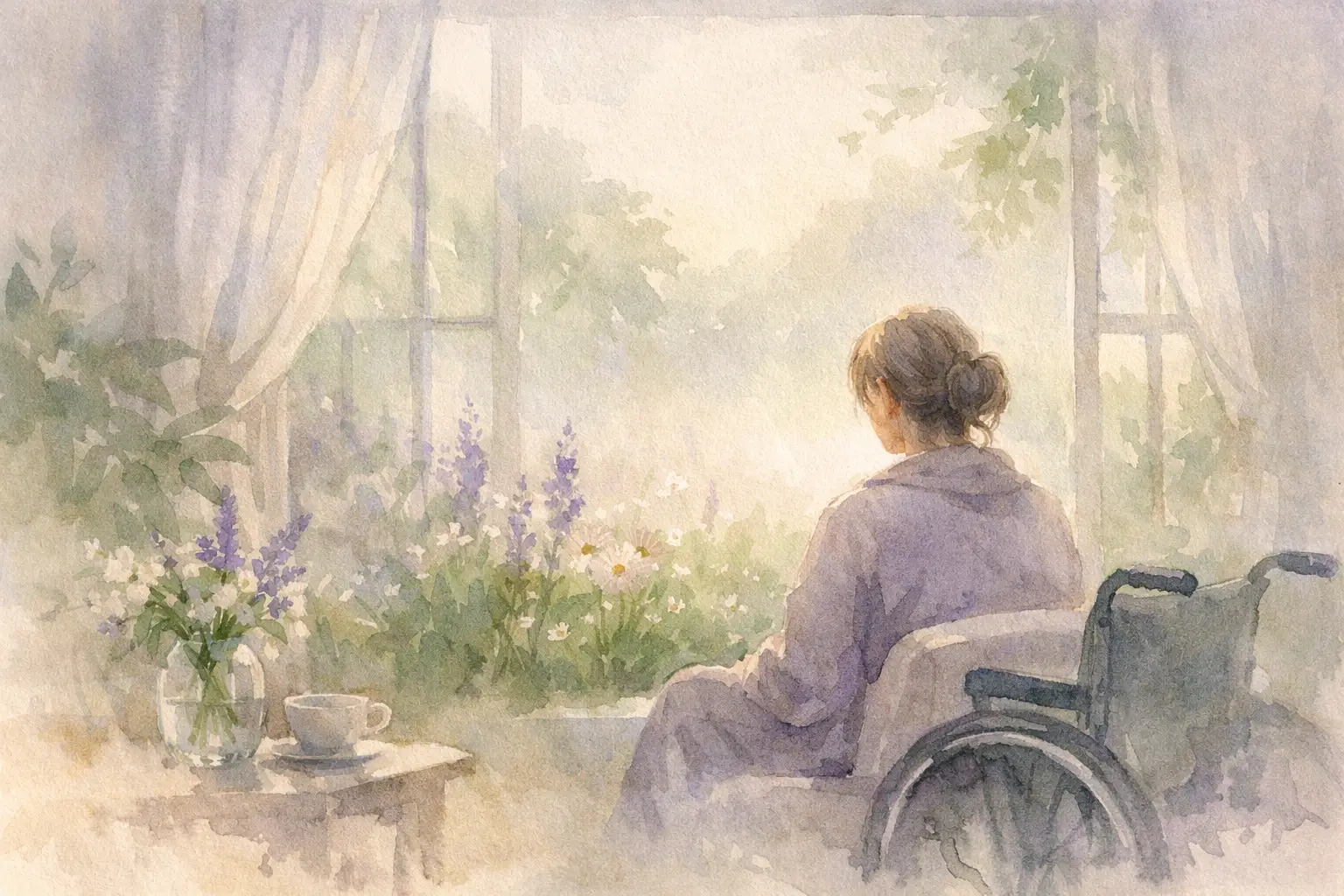
The loneliness often arrives in ordinary moments. You leave your parent’s house after helping with dinner, pills lined up on the counter, laundry folded, something tender and strained still hanging in the air. You get in the car, put your hands on the wheel, and feel the full weight of why caregiving feels so lonely. You were with someone all day, and still, you feel profoundly by yourself.
That feeling can be confusing, especially when caregiving is so full of contact. There are phone calls, appointments, errands, reminders, repeated conversations, interrupted sleep, and the constant mental labor of remembering what needs to happen next. On paper, your days may look crowded. But loneliness is not only about the absence of people. Sometimes it comes from the absence of being met. Caregiving can place you in one of the most intimate seasons of your life while also leaving very little room for your own inner world to be seen.
Why caregiving feels so lonely, even when you're never alone
One reason this season can feel so isolating is that caregiving changes the shape of your relationships faster than language can catch up. You may still be someone’s daughter or son, and yet your role now includes watching, managing, soothing, anticipating, and carrying what once belonged to the parent. That role reversal is practical, but it is also emotional. It can stir grief, guilt, resentment, tenderness, protectiveness, and devotion, sometimes all before noon.
Not everyone around you understands that complexity. Friends may ask how your parent is doing but not how you are holding the slow heartbreak of becoming the steadier one. Siblings may care deeply and still participate unevenly. A partner may love you and still not fully grasp the low hum of vigilance running through your body. Much of caregiving happens in details that are too small to explain and too meaningful to dismiss. Over time, that gap between what you live and what others can hold begins to feel lonely.
There is also the loneliness of being needed in a way that changes the atmosphere of love. When someone depends on you more each month, your bond may deepen, but it may also lose some of its old ease. Conversations become more functional. Time together becomes organized around tasks. Even beautiful moments can carry sorrow because you remember who this person was, who you were with them, and how much has shifted. Loving someone through decline or fragility can feel sacred, but sacred things are not always light.
The invisible grief inside caregiving
Many caregivers are living with grief long before a final goodbye. You may be grieving the parent who once advised you, drove with confidence, hosted holidays, or remembered every birthday without prompting. You may be grieving your own life too, the spontaneity you used to have, the marriage or friendships affected by constant responsibility, the version of yourself who could rest without listening for the phone.
This grief often goes unnamed because nothing clear and socially recognized has happened. The person is still here. The needs are ongoing. The world around you may treat your experience as logistics rather than loss. But when your heart is continually adjusting to change, and there is no clear ritual for that change, loneliness settles in. Grief needs witness. Without it, it can start to feel like private weather.
There is another layer as well. Caregivers are often expected to be composed, grateful, and capable. If you love the person you care for, people may assume that love cancels out exhaustion. If you feel frustrated, touched out, bored, trapped, or emotionally numb at times, you may judge yourself before anyone else gets the chance. That self-silencing makes loneliness heavier. It becomes harder to say, I love them deeply and this is wearing me down.
Why other people often don't know what to say
Part of what makes caregiving so lonely is that it exposes truths many people would rather not face. Aging asks us to reckon with dependence, mortality, family history, and the limits of control. When you are living close to those truths, you may notice that others become awkward, overly cheerful, or quick to offer simple fixes. Usually, they are not being cruel. They are protecting themselves from discomfort.
Still, being on the receiving end of that can sting. You may hear advice when you needed companionship. You may receive praise for being strong when what you wanted was permission to be honest. You may even stop bringing it up because translating your life for people who do not understand takes energy you no longer have.
This is where many caregivers begin to feel emotionally homeless. You are doing one of the most human things imaginable, and yet you may feel outside the rhythms of ordinary social life. Your schedule is less flexible. Your attention is divided. Your emotional bandwidth is thinner. Invitations become harder to accept, and eventually they may come less often. Loneliness grows quietly that way, through small separations that accumulate.
The private burden of being the one who notices everything
Caregiving often turns one person into the keeper of details. You notice the mood changes, the repeated stories, the unopened mail, the food that went untouched, the tension in the room, the subtle shift in gait, the sentence that sounded off, the practical thing everyone else missed. You become the one who remembers. You become the one who checks.
That role can make you feel both essential and profoundly alone. Being the one who notices everything means carrying a constant mental and emotional inventory. Even when help is available, you may still be the person tracking the whole picture. That is its own form of loneliness because very few people see the full extent of what you hold.
It can also create distance inside your family. Others may only see fragments, while you are living with the whole pattern. You may start to feel protective of your reality, especially if explaining it leads to minimization or debate. And when your truth keeps meeting misunderstanding, withdrawal can feel easier than trying again.
What helps when caregiving feels lonely
Relief rarely begins with forcing yourself to be more positive or more efficient. It often begins with telling the truth in a gentler room. Sometimes that room is a journal, a trusted friend, a support circle, a therapist, a faith practice, or a quiet ritual at the end of the day where you let your own feelings come all the way forward. What matters is not performing resilience. What matters is being witnessed, even if that witness begins with you.
It also helps to stop measuring loneliness only by how many people are around you. Ask instead: where am I actually known? Who can tolerate the messy version of this story, the one where love and resentment sit beside each other, where devotion has a cost, where grief keeps changing shape? One honest conversation can soften an isolation that ten casual check-ins never touch.
Small forms of self-return matter too. Not as a polished routine, and not as one more thing to get right. More as a way of reminding your nervous system that you still belong to yourself. A cup of tea before entering the house. Five minutes in the car without a podcast. A short prayer while folding towels. Writing down one sentence that tells the truth about today. These gestures do not remove the burden, but they create a place inside it where your own life can still breathe.
If you are in this season now, you are not failing because it feels lonely. In many ways, loneliness is one of caregiving’s most honest signals. It tells you that what you are carrying is intimate, ongoing, and larger than most people know how to see. At wearelovewins, we believe this part of life deserves language, tenderness, and a space held with love. Until more of the world learns how to honor caregivers well, may you keep choosing places, people, and rituals that help your heart feel accompanied.