Self Care for Family Caregivers That Lasts
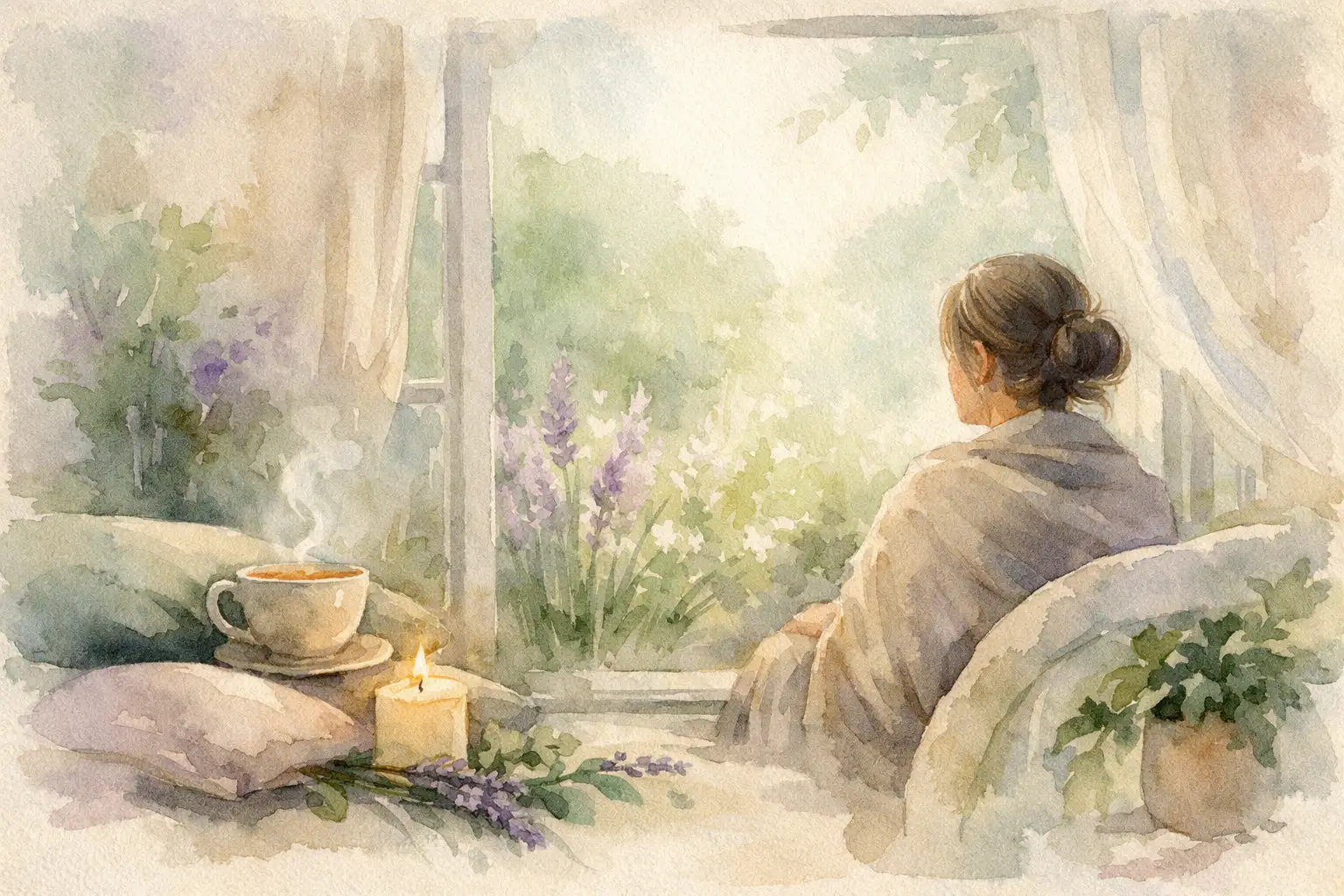
Some days, self care for family caregivers looks nothing like the version sold in glossy wellness culture. It may be a glass of water before the next phone call, five quiet minutes in the car before walking into your parent's home, or choosing not to explain yourself to someone who doesn't understand what this season asks of you. When care becomes part of your identity, your own needs can start to feel blurry. You are still here, though, and you still need tending.
Family caregiving changes the emotional weather of a life. There is devotion in it, and fatigue. There can be tenderness one hour and resentment the next, followed by guilt for feeling either too much or not enough. Many caregivers live inside a private swing between practical tasks and anticipatory grief. You are scheduling, lifting, reminding, listening, absorbing, and quietly bracing for what may be changing in front of you. Any conversation about caring for yourself has to begin there, in the truth of what this really is.
The trouble with most advice on wellness is that it assumes you have spare time, spare money, spare attention. Caregivers often have none of those in reliable supply. So a gentler approach helps. Instead of treating self care as another project to manage, it can become a way of returning to yourself in small, repeatable moments. Not grand gestures. Not one more standard you have to meet. More like a steady thread you can hold.
What self care for family caregivers really means
In this season, caring for yourself is less about escape and more about repair. It is the practice of noticing what your body, mind, and spirit are carrying, then responding with as much honesty as you can. That response may be physical, such as resting earlier or eating something nourishing before the day gets away from you. It may be emotional, such as admitting you are angry, lonely, or scared. It may be relational, such as asking a sibling for one concrete kind of help instead of hoping they will guess.
This kind of self care is not always pretty. Sometimes it means lowering the bar on what gets folded, answered, or attended. Sometimes it means saying, I can't be the one to handle that today. There is love in showing up for someone else's needs, but there is also love in recognizing your own limits before they harden into resentment or collapse.
The most sustainable form of care is often the least dramatic. It respects your actual life. It can live inside a morning, a waiting room, a grocery run, or the few minutes after everyone else has gone to sleep. It does not demand that you become a different person. It simply asks you to stop abandoning yourself while you care for someone else.
Start with your nervous system, not your checklist
Caregivers are often praised for being capable. That capability can hide how activated the body becomes over time. When you are constantly anticipating needs, fielding change, and managing emotional unpredictability, your system rarely gets a full signal of safety. Before adding habits or goals, it helps to begin with regulation.
That may mean placing one hand on your chest and one on your belly before you get out of bed, then taking three slower breaths than feel natural. It may mean standing outside for two minutes between responsibilities and letting your eyes rest on something living, a tree, the sky, a patch of grass. It may mean softening the sensory load in your home with lower lights at night, a blanket you reach for on purpose, or a cup of tea that marks the end of caregiving tasks, even if the emotional work continues.
These gestures matter because they tell the body it is not only a machine for endurance. They create tiny transitions in a role that can otherwise feel unbroken. A regulated moment will not erase your circumstances, but it can make the next hour feel more inhabitable.
Let your care be small enough to keep
When life is demanding, ambitious routines tend to fail first. That doesn't mean you are failing. It means your care needs to be sized to the life you are living.
Try choosing anchors instead of ideals. One nourishing breakfast you can repeat. One short walk around the block or down the hallway. One friend you can text honestly. One notebook where you can put the thoughts you don't want to carry alone. If you are exhausted, let simplicity be part of the wisdom.
There is a quiet dignity in basic care. Eating before you become shaky. Sitting down while you make phone calls. Putting a sweater by the door because you are always cold in over air-conditioned buildings. Keeping a list of what needs to be handled so your brain doesn't have to clutch every detail at once. These are not minor things. They are the architecture of steadiness.
Make room for the feelings that don't match the role
One of the lonelier parts of caregiving is how often people assume your emotions should be tidy and noble. Real life is more layered than that. You can love a parent deeply and dread the next visit. You can feel grateful for a lucid afternoon and still grieve what has changed. You can miss the person they were while sitting right beside them.
Emotional self care begins with allowing complexity without immediately correcting it. A journal can help, not as a performance of insight but as a place to tell the truth. What feels heavy today. What made you angry. What you wish someone would ask. What you miss. What you are proud of surviving. If writing feels like too much, speak it into your phone or say it in the shower where no one needs anything from you for a moment.
If you have a trusted friend, counselor, faith leader, or support circle, let one place in your life be honest. Not polished. Honest. Caregivers often become interpreters for everyone else's feelings. You deserve a space where you don't have to translate your own.
Protect the parts of you that are not only a caregiver
Loving someone through aging can begin to consume the shape of your days. Over time, the role can crowd out the parts of you that once felt easy to access. Your humor. Your creativity. Your style. Your prayer life. Your pleasure in music, cooking, reading, or being outside. Keeping contact with those parts is not indulgent. It is a way of remaining whole.
This does not require a full day off or a perfect boundary. Sometimes it is as simple as wearing something that feels like you, playing one song that returns you to yourself, tending a small morning ritual, or reading two pages before sleep instead of scrolling in a numb haze. The point is not to produce a better version of yourself. The point is to remember you are more than the sum of tasks.
At wearelovewins, this is part of what we hold so carefully: the understanding that caregiving is practical and sacred at once, and that language, ritual, and beauty can make a hard season feel a little less lonely.
Ask for help in ways people can actually answer
Support is often uneven. Some people care but don't know what to do. Others disappear because the reality feels uncomfortable. It depends on your family, your friendships, and the history already living in those relationships. Waiting for perfect help can leave you disappointed and more depleted.
Sometimes it works better to ask for one specific thing. Stay with Mom on Thursday from two to four. Bring dinner on Sunday. Be the person I text after appointments. Pick up groceries this week. Clear requests give people a doorway. They also help you notice who is consistently able to meet you with care, and who may not be the right person to lean on for this kind of support.
There may also be times when the most loving choice is to accept that certain people will not show up in the way you hoped. That grief is real. So is the relief that can come from no longer spending precious energy trying to force recognition from those who can't offer it.
Self care for family caregivers includes grief
Not all grief arrives after a goodbye. Some of it lives in the daily witnessing of change. The parent who once advised you now depends on you. The family home feels different. Familiar conversations vanish. Old dynamics flare under new pressure. There can be loss even in the middle of ongoing love.
When grief is woven into caregiving, self care may look quieter and more spacious than people expect. It may be lighting a candle at the end of the day. Taking a walk without a podcast so your thoughts can catch up. Letting tears come instead of postponing them again. Returning to a spiritual practice that reminds you this season has dignity, even when it feels unbearably hard.
You do not need to turn pain into a lesson right away. You do not need to make this beautiful before it is ready. Sometimes caring for yourself means simply acknowledging, this hurts, and staying gentle with your own heart.
If you are carrying more than anyone can see, you are in the right place. Let your care be modest, faithful, and real. The smallest ritual, repeated with tenderness, can become a space held with love.