12 Intergenerational Connection Ideas at Home
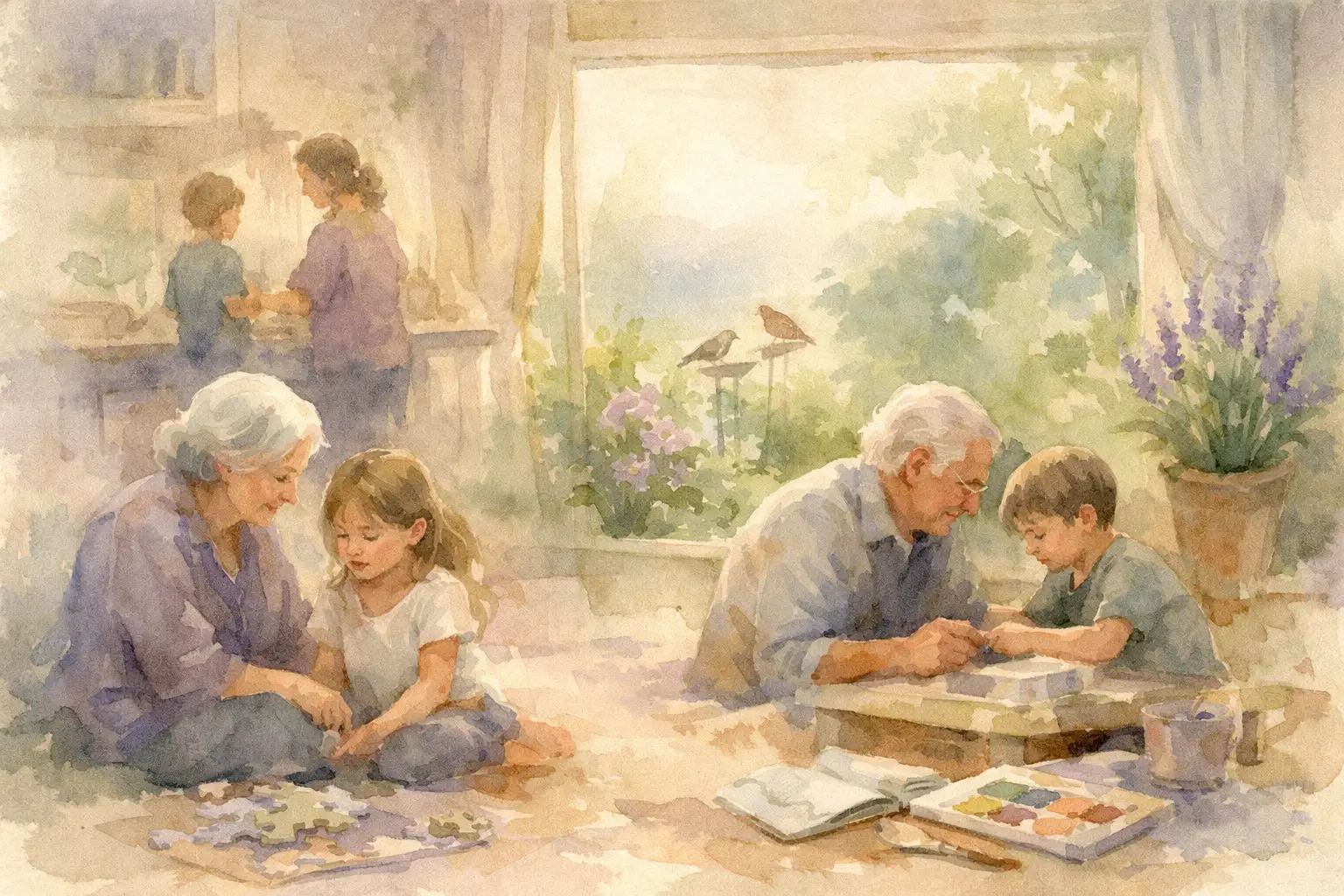
Some of the most meaningful moments at home do not look especially remarkable from the outside. A parent folds towels while telling the same story for the third time. A grandchild asks a question that opens a memory no one has heard before. Someone stirs soup, someone laughs, someone grows quiet. Intergenerational connection ideas at home matter because they give shape to love in ordinary hours, especially when family roles are shifting and everyone is trying to stay close through change.
When you are caring for an aging parent or trying to keep family bonds tender across different life stages, connection can begin to feel like one more thing to plan. That pressure can make even loving families feel strained. The gentler truth is that closeness usually grows through rhythm, not performance. You do not need a perfect activity, and you do not need every person to show up with the same energy. You need a few ways to make room for each other as you are.
Why intergenerational connection ideas at home can feel so meaningful
Home holds history. It carries the habits, tensions, recipes, scents, and small rituals that have shaped your family for years. That is part of why connection at home can feel healing, but it is also why it can feel tender. Old dynamics often reappear in familiar rooms. The adult child who now manages appointments may still feel twelve years old in the kitchen. The parent who needs more support may still want to be the one taking care of everyone else.
Because of that, the best shared activities are rarely the flashiest ones. They are the ones that create enough ease for everyone to soften. A simple ritual can make space for dignity, memory, humor, and mutual care all at once. It helps to choose ideas that allow for different energy levels, changing attention spans, and the emotional reality of the day. Some days will hold easy conversation. Some days may only hold companionship. Both count.
12 intergenerational connection ideas at home
One of the kindest places to begin is with storytelling, though not in a formal way that makes anyone feel put on the spot. You might place a bowl of simple prompts on the table during tea or after dinner. Questions like What did your bedroom look like growing up, or What meal made you feel most at home as a child, often bring out details that feel alive. Stories give older family members a sense of continuity, and they offer younger ones a way to understand where they come from.
Cooking together can also become a quiet bridge between generations. This works especially well when the goal is not efficiency. Let the process be slower than usual. Ask about why a dish is made a certain way, or what memory comes with it. Even if one person can no longer do every step, they can still guide, taste, or simply sit nearby and narrate. A familiar recipe has a way of carrying identity when other things feel uncertain.
Shared music can change the atmosphere of a home in minutes. Make an evening of listening to songs from different decades and inviting each person to choose one that means something to them. Music often reaches places that regular conversation cannot. It can spark memory, shift mood, and create unexpected understanding between people whose daily lives look nothing alike.
If conversation feels hard, try a hands-busy activity. Sorting old photos, watering plants, shelling peas, folding laundry, or arranging flowers can make talking feel less intense. The task gives your bodies something to do while the heart catches up. This can be especially supportive in seasons shaped by fatigue, grief, or role reversal, when eye contact and direct emotional language may feel like too much.
Reading aloud is another gentle practice that is often overlooked. It could be a poem, a devotional passage, a short essay, or a family letter tucked into a drawer years ago. The content matters less than the shared pause. Being read to can feel deeply comforting, and reading aloud can become a way to hold one another through an anxious or quiet afternoon.
For families with children in the mix, collaborative art can offer a soft landing place. You might make a family collage, decorate cards for one another, or create a memory page with photos and handwritten notes. The point is not the finished product. It is the permission to express affection, memory, and personality without having to explain everything perfectly.
Home videos and photo albums can open beautiful conversations, though they can also stir grief. That does not mean you should avoid them. It simply means it helps to enter with gentleness. If someone becomes emotional, let that be part of the moment rather than something to rush past. Love and sorrow often sit side by side when we remember.
Rituals around the seasons can also deepen connection. Lighting a candle at the start of supper, naming one thing you are grateful for on Sunday evenings, pressing flowers in spring, or making a favorite soup on the first cold day of the year can give the household a shared pulse. These small traditions tell the body, we are here together, and this time matters.
If your loved one enjoys being useful, invite contribution rather than offering entertainment. Ask them to teach a practical skill, show a family method, mend something simple, or help choose what to plant in a windowsill herb pot. Many older adults carry a quiet ache when they feel their role has narrowed. Being asked for wisdom can restore a sense of belonging that no passive activity can replace.
Gentle movement belongs here too. A short walk in the yard, stretching in the living room, or even swaying to music while dinner cooks can help everyone feel more present. Movement changes the emotional weather of a home. It does not need to be formal to be meaningful.
Conversation cards or reflection prompts can be especially supportive when families want closeness but do not know how to begin. Sometimes people need language they did not grow up with. A thoughtful question can make room for stories, regrets, hopes, and gratitude in ways that feel contained rather than overwhelming. This is one reason reflective tools can be such a relief in caregiving seasons. They help connection happen without forcing it.
And sometimes the most honest idea is simply shared quiet. Sit on the porch. Peel fruit together. Watch the rain. Not every intergenerational moment needs to become memorable in a visible way. Familiar silence can be its own form of trust.
How to choose intergenerational connection ideas at home that actually work
It helps to choose for the day you are having, not the day you wish you were having. If your parent is tired, a long activity may create more stress than comfort. If family history feels especially charged, a memory-based prompt might need to wait for another time. Good connection is responsive. It listens to the room.
You may also notice that different generations want different things from the same moment. A child may want play. An older adult may want calm. You may want reassurance that you are doing enough. Try to let the activity hold more than one need when it can. Baking, listening to music, or looking through photos often works well because each person can participate in their own way.
Keep expectations light. A meaningful half hour is enough. A single honest story is enough. Even a moment of reduced tension can be enough for today.
When connection feels complicated
Not every family carries ease. Some relationships are loving and strained at the same time. Some homes hold unresolved pain alongside devotion. If that is your reality, you are not failing because connection feels layered.
In those cases, choose activities with a little structure. Side-by-side tasks are often easier than intense face-to-face conversation. Short rituals can feel safer than long emotional talks. It may also help to focus on sensory comfort, like warm drinks, soft lighting, familiar music, or a favorite blanket nearby. A space held with love can make hard relationships feel a little less sharp.
There is wisdom in accepting that closeness may look different now. It may be quieter. It may be slower. It may include more pauses, more repetition, and more tenderness toward what cannot be repaired on command. At wearelovewins, we believe these seasons deserve language and ritual, not because they erase the ache, but because they help us stay human inside it.
The most lasting intergenerational connection ideas at home are usually the ones you can return to without effort. A song after dinner. A question in a jar. Tea in the same chair each afternoon. A simple habit becomes a kind of love letter over time. If you are longing for a way back to one another, start small, stay gentle, and trust that even ordinary moments can become sacred when they are made with care.