How to Make Memory Boxes That Hold a Life
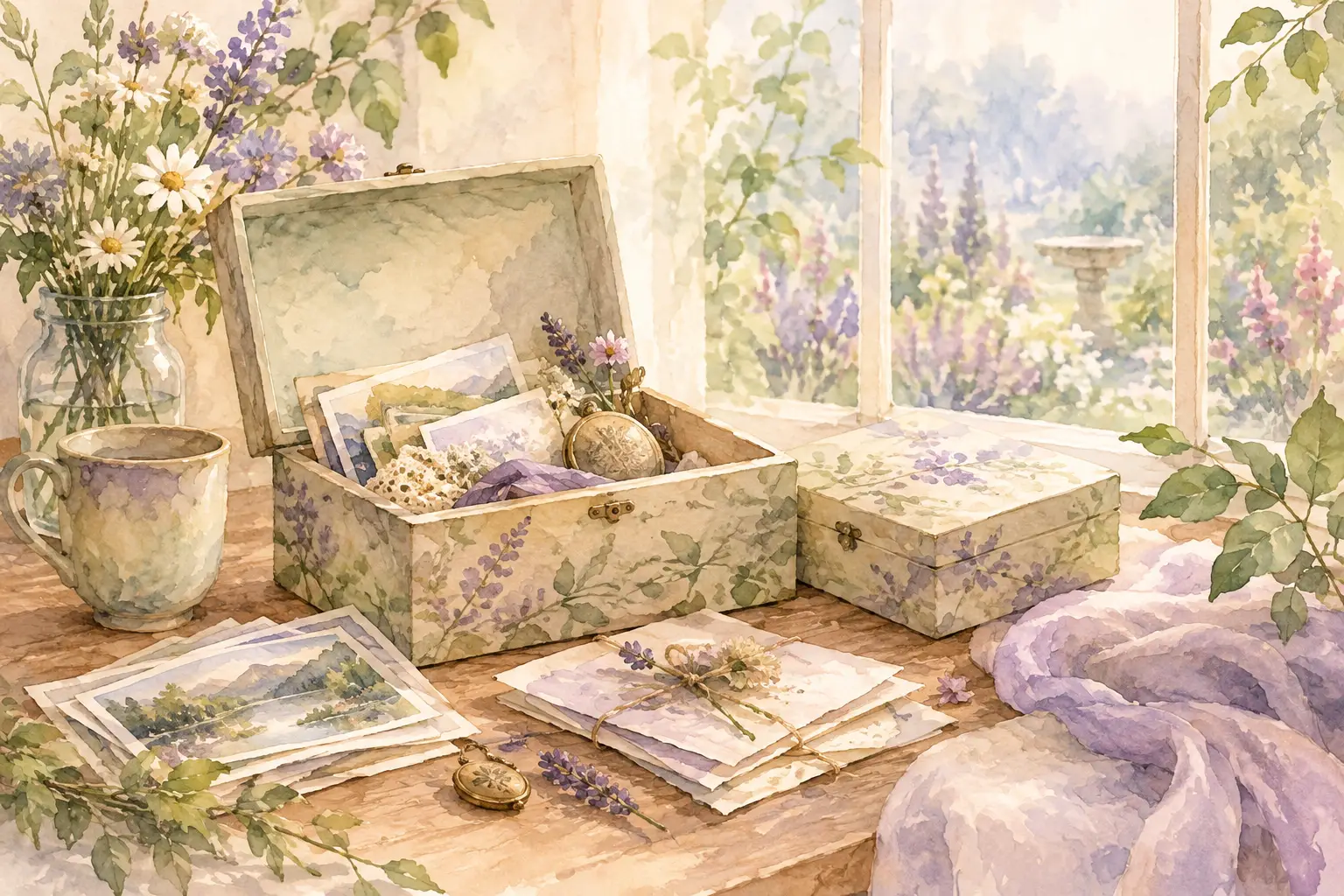
A small blue button can carry more feeling than a whole photo album. So can a recipe card softened by years of use, a handwritten note, a concert ticket, or the scent of a favorite hand cream tucked into a drawer. When you are learning how to make memory boxes, you are not simply organizing objects. You are making a space held with love for the ordinary details that tell the truth of a life.
For those caring for an aging parent, witnessing a loved one change, or moving through grief that does not always have a name, a memory box can become a gentle ritual. It offers somewhere to place what feels too precious to discard and too tender to leave scattered around the house. There is no right time to begin. You might make one while your person is still here, alongside them if that feels welcome, or later, when you are ready to gather what remains.
Begin with the feeling you want the box to hold
Before choosing a container, pause with a quieter question: what do I hope this box will offer when I open it?
Perhaps you want to remember your mother's humor, the particular way your father made Sunday breakfast, or the family rituals that shaped you before you had words for them. Perhaps the box is for a child who may one day want to know more about a grandparent. It may also be a place to honor a relationship with all of its tenderness and complexity. Love does not require a polished story to be real.
Giving the box a simple intention can keep the process from becoming overwhelming. You might call it “Dad's small joys,” “The kitchen I grew up in,” “Things I want to remember,” or simply use a loved one's name. A broad box can hold many seasons, while a focused one may feel easier when you are tired or carrying a great deal already.
There is no need to decide whether the box is a keepsake for you, a gift for someone else, or an archive for the future. It can be all three over time. Let its purpose stay flexible enough to meet the season you are in.
Choose a container that feels accessible
The most beautiful memory box is often the one you can open without worry. A sturdy lidded box, a wooden keepsake box, a fabric-covered storage box, or a simple archival-style container can all work well. Choose a size that suits the items you genuinely want to keep, rather than a size that asks you to preserve everything.
If you are creating the box with an older parent or loved one, consider ease as much as appearance. A lid that lifts easily and a container that is not too heavy can make the experience more inviting. If you expect to revisit it often, a box with dividers or envelopes may help the contents feel held rather than crowded.
You can line the bottom with tissue paper, a folded scarf, a piece of fabric from home, or a letter to the person whose life it reflects. These details are not necessary, but they can create a sense of care from the first opening. A memory box does not have to look perfect to be meaningful. It only needs to feel like a place where these pieces belong.
Gather objects that carry a story
Begin slowly. Set aside an hour, make a cup of tea, and choose one small area: a drawer, a bedside table, a folder of papers, or a kitchen shelf. Trying to sort an entire home at once can turn a tender practice into an exhausting task.
Look for objects that awaken a specific memory, sensation, or story. The value is rarely in whether an item is conventionally special. A grocery list in familiar handwriting may hold more than an expensive heirloom because it brings a person's presence close. A worn measuring spoon can recall the meals that gathered everyone around the table. A favorite postcard may reveal the hopes someone carried quietly.
You might include photographs, handwritten cards, recipes, printed emails, small mementos from travel, a meaningful book passage copied by hand, a pressed flower, or a note about a phrase they often said. If an object is too large, take a photograph of it and add a few sentences about why it matters. This makes room for memory without asking your home to hold every physical thing.
When you are uncertain about an item, try asking: what story would disappear if I let this go? If there is no story, it may be something you can release with gratitude. If a story arrives immediately, consider keeping the object or writing the story down before deciding.
Let their voice be part of the collection
A memory box becomes especially alive when it includes language. If your loved one is able and willing, invite them to tell you about an old photograph, a childhood home, a favorite meal, or a time they felt most themselves. Keep the invitation light. One good question during a car ride or while folding laundry can be enough.
You do not need to record every conversation. A few handwritten notes can be deeply precious: “She loved yellow roses because her mother grew them.” “He always ordered pie before deciding on dinner.” “They met at a dance, though neither one liked dancing.” These are the details that often fade first, and they are also the details that make a person feel near.
If speaking directly is not possible or does not feel right in your relationship, write from your own memory. You are allowed to preserve the version of them that you knew.
Add notes so the meaning stays close
Objects can outlast our ability to explain them. A label, a short story, or a date can become a quiet gift to your future self and to anyone who opens the box after you.
Try placing small notes beside a few items. You might write where it came from, whose hands held it, what it reminds you of, or why you chose to save it. Let the notes be imperfect and personal. This is not a museum display. It is a living record of love.
If words feel difficult, use gentle prompts:
- “I want to remember the way you...”
- “This belonged to you, and it makes me think of...”
- “Our family always...”
- “One thing I wish I had asked you is...”
- “This is proof that you were here.”
The last prompt can be especially tender during anticipatory grief, when someone is still present but changing before your eyes. Preserving a memory does not mean you have given up hope or stopped being present. Sometimes it helps you pay closer attention to the life that is still unfolding.
Make room for complicated memories
Not every memory box needs to be purely sweet. Families are made of devotion, misunderstandings, repair, absence, laughter, and things that were never said. You do not have to place only cheerful objects inside, and you do not have to include anything that causes harm when you see it.
A more honest box may hold a letter you never sent, a reflection on what caregiving has asked of you, or a photograph that brings both warmth and ache. You can keep these pieces in a separate envelope within the box if you want a little distance. The practice should support your emotional safety, not ask you to override your own boundaries.
It also helps to remember that a memory box is allowed to change. Add to it on birthdays, holidays, anniversaries, or the ordinary afternoons when you find something that belongs there. Remove what no longer feels right. Grief and love both move in cycles, and the box can move with you.
Turn creating the box into a family ritual
When the moment is right, invite siblings, children, or close friends to contribute one item and one story. This can be particularly meaningful when family members remember the same person differently. Rather than trying to agree on one complete version of a life, let the box hold many perspectives.
You might gather around a table and ask everyone to bring a photo or object, then share why they chose it. Keep the gathering small and unhurried. If emotions rise, let them. A pause, a laugh, or a few quiet minutes can be part of the ritual too.
For children, a memory box can offer a gentle, tangible way to stay connected to a person they miss or are getting to know in a new way. Encourage them to draw a picture, write down a favorite saying, or choose something simple that reminds them of time together. Their memories may be different from yours, but they deserve a place.
A memory box will never contain an entire person. No collection of objects can hold every gesture, every story, or every form of love that passed between you. Yet a carefully chosen few can become a doorway: one you can open on a hard day, a quiet morning, or years from now, when you need to remember that the smallest things were never small at all.