How to Honour Family Transitions with Care
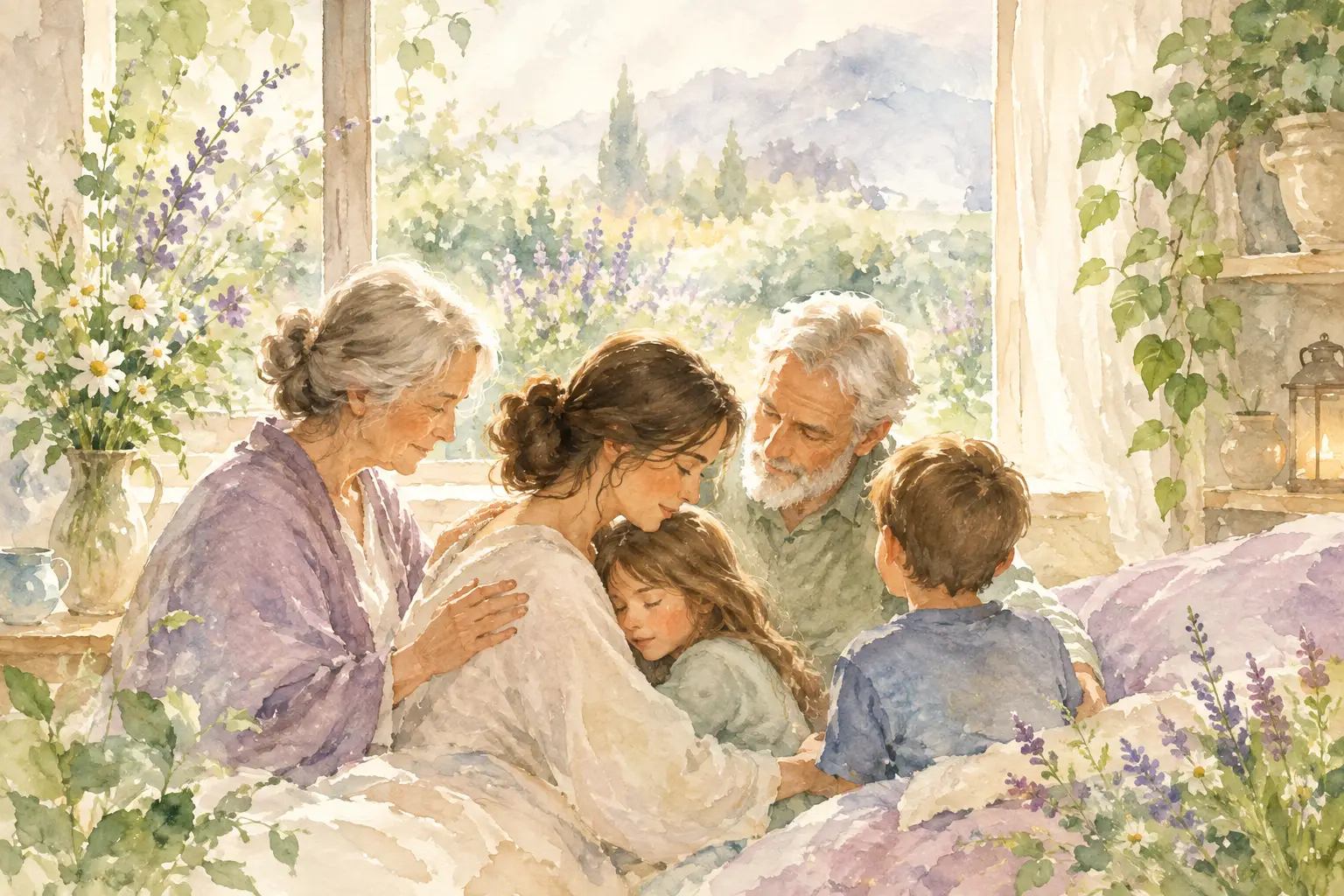
The first time you notice your parent waiting for you to make a decision, something inside the family can shift. Perhaps it happens quietly, while sorting through a familiar drawer or deciding who will drive after dark. There may be no single moment that announces the change, yet everyone feels its presence. Learning how to honor family transitions begins here: by letting yourself acknowledge that love is changing shape.
Families move through many thresholds. A parent may need more support at home. Siblings may begin sharing responsibilities differently. Adult children may be grieving the version of family life they assumed would continue forever. Even welcome changes, such as a move closer to loved ones or a new grandchild, can awaken old memories, tender fears, and questions about belonging.
These seasons do not ask us to have perfect language. They ask us to stay near what is true, with as much gentleness as we can gather.
Name the transition before trying to solve it
When a family is under strain, logistics often take over. There are calendars to coordinate, meals to arrange, rooms to clear, and calls to return. Those tasks matter, yet the emotional shift can become invisible beneath them. Naming what is happening gives everyone a place to stand.
You might say, "I can feel that our roles are changing, and I know that may feel strange for all of us." Or, "I miss how easy this used to feel, even as I want to be here with you now." Simple words can soften the pressure to pretend that nothing has changed.
Naming a transition does not require everyone to agree on its meaning. One sibling may feel frightened, another may feel practical, and a parent may feel protective of their independence. All of those responses can exist in the same room. The goal is not emotional consensus. It is a family culture where no one has to carry the whole truth alone.
How to honor family transitions through ritual
Ritual offers a container for experiences that are too tender to reduce to a checklist. It does not need to be elaborate or spiritual in a formal sense. A ritual can be as simple as choosing a particular mug for Sunday tea, playing the songs your father loved while you cook together, or taking a photograph before a room is packed away.
The most meaningful rituals are often small enough to repeat. They tell the people you love, "This moment matters. You matter within it." When familiar routines are changing, a steady gesture can bring comfort without asking anyone to perform gratitude or optimism.
Consider creating a practice around a transition your family is facing. Before a parent leaves a longtime home, invite each person to choose one memory they want to carry forward. If responsibilities are being shared among siblings, begin a regular check-in by naming one thing that has been hard and one thing that has brought relief. If visits have become more frequent, let the arrival have its own quiet rhythm: a favorite snack, a porch sit, ten minutes without phones.
Rituals are not meant to make loss feel beautiful. They make room for beauty alongside loss, which is different. A beloved lamp, a handwritten recipe, the sound of a familiar laugh can become a thread between what was and what is still here.
Make space for the ordinary goodbye
Some goodbyes are not dramatic enough to receive much attention. It may be the last holiday hosted at your parents' table, the last drive on a route they once knew by heart, or the last time they make a meal without your help. These moments can pass so quickly that you only recognize them later.
When you can, pause for the ordinary goodbye. Sit a little longer. Ask for the story behind the recipe. Take in the way sunlight falls across a room. Write down what you want to remember while it is still close.
This kind of attention is not about preserving everything. No one can do that. It is a way of meeting a changing life with reverence rather than rushing past it.
Let conversations be imperfect and kind
Families often avoid the conversations that matter most because someone might become upset. Yet silence can create its own loneliness, especially when everyone is privately trying to be brave. Honest conversation does not mean forcing a deep talk at the wrong time. It means leaving the door open with care.
Choose a moment when no one is already overwhelmed, and begin with curiosity. Ask your parent what they are missing lately. Ask a sibling what part of helping feels most difficult. Ask yourself what you have not said because you were trying to protect everyone else.
A helpful conversation may be brief. You do not need to resolve every feeling before dinner or before the next appointment on the calendar. Sometimes the kindest outcome is simply hearing, "I know this is a lot," and allowing that sentence to remain unfinished.
It also helps to remember that support can look different from person to person. One family member may want to talk openly, while another expresses love by fixing something, bringing food, or showing up reliably. Make room for different languages of devotion, while still being clear about what you need. Resentment often grows where needs have been assumed rather than spoken.
Hold grief and gratitude in the same hands
Family transitions can carry a complicated blend of feeling. You may be grateful for more time together and heartbroken by the reason you have it. You may feel honored to help your parent and weary of being the person everyone calls. You may long for the parent you remember while loving the person before you today.
None of these feelings cancel each other out. Caregiving and role reversal can bring devotion into sharper focus, while also asking more of the body, the schedule, and the heart than many people expect. Giving yourself permission to feel mixed emotions can reduce the shame that so often attaches to them.
A journal can be a gentle place for what feels too complicated to say aloud. Rather than trying to write a polished account of this season, begin with a few honest lines: "Today I miss..." "Today I wish someone understood..." "Today I am grateful for..." Over time, these small entries become a record of your love in its real form, not only its most graceful moments.
If writing feels like one more responsibility, try a spoken practice instead. On the drive home, name three things you noticed. Let one be difficult, one be ordinary, and one be tender. This can help you stay connected to your own inner life when so much attention is directed outward.
Share the care without keeping score
In many families, old patterns become louder during transition. The responsible sibling may take on too much. The distant sibling may seem absent. The parent who has always cared for others may resist receiving help. These dynamics can be painful, and there is rarely a perfect division of labor.
Start by being specific. Broad requests for help can leave people unsure of where to begin, while a clear request offers a real way to participate. Ask someone to bring dinner on Tuesday, make a weekly call, sit with your parent for an afternoon, or organize family updates. Specificity protects goodwill from being lost in confusion.
At the same time, be mindful of the story you tell yourself about who is doing enough. Some people have more capacity, proximity, or emotional availability than others. That does not erase the need for fairness, but it may invite a more honest conversation about what each person can offer. The aim is shared responsibility with room for reality, not a ledger of love.
Keep a small place for yourself within the change
When someone you love needs more from you, your own needs can become easy to postpone. Still, you are part of this family transition, not merely the person managing it. Your exhaustion, sadness, irritation, and longing deserve tenderness too.
Choose one practice that returns you to yourself without demanding much time. It might be a slow morning shower before the house wakes, a walk around the block after a difficult visit, or a few minutes with a candle and a page in your journal. Let it be modest and consistent. The point is not to become more productive or calm on command. It is to remember that you are a person living through this season, worthy of care within it.
At wearelovewins, we believe love is an active practice. Sometimes that practice is a conversation card on the kitchen table. Sometimes it is a hand held in silence. Sometimes it is admitting that today was hard and allowing someone trustworthy to sit beside you in that truth.
Family transitions ask us to release the fantasy that love means never changing. Love changes because life changes. It can become more deliberate, more honest, and more spacious when we meet these thresholds with presence. Take one small moment today and mark it with care. Let it be enough to say: we are here, we are changing, and we are still connected.