A Family Ritual for an Ageing Parent: The Sunday Table
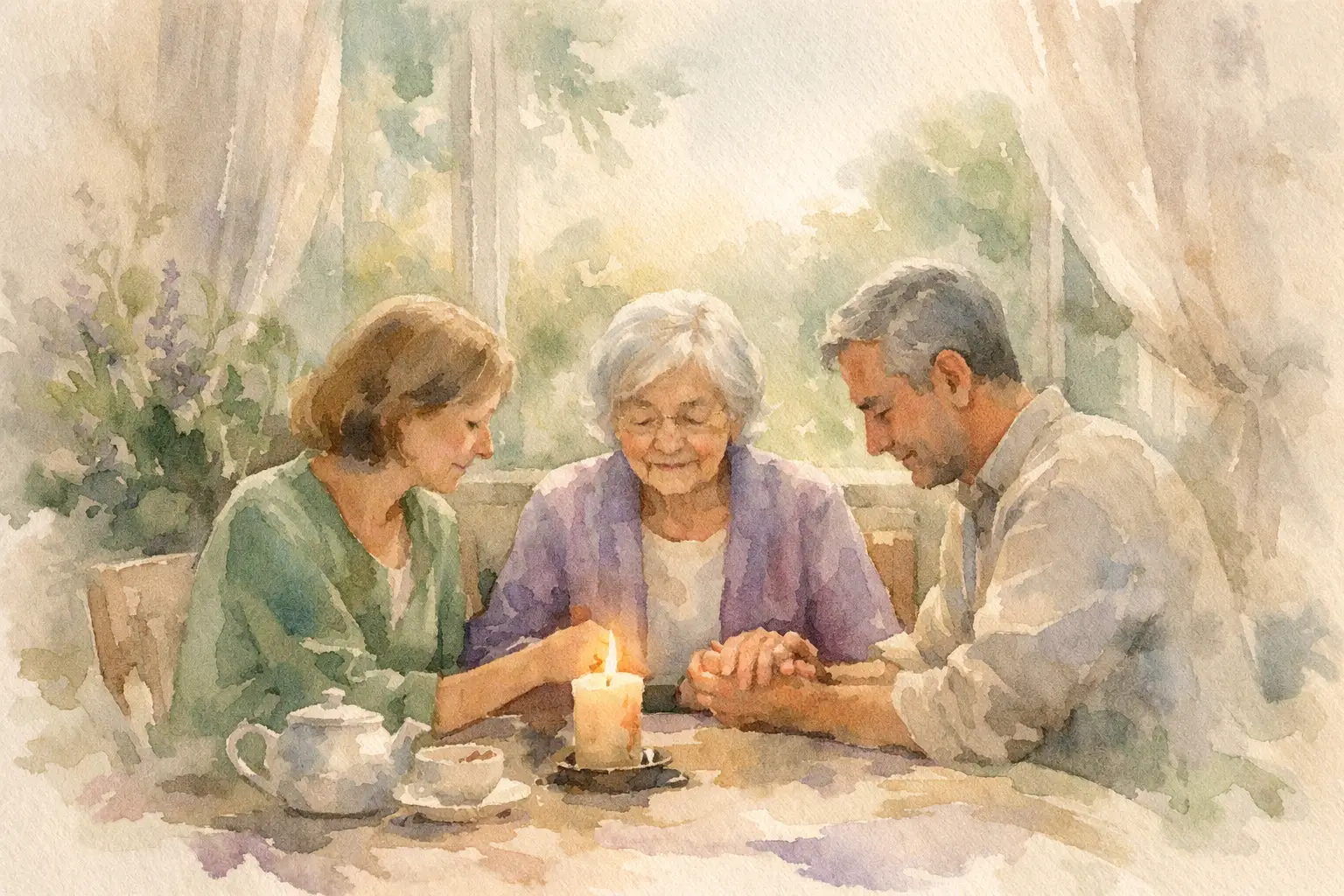
The Sunday afternoon your mother asks whether anyone wants the old blue bowl may look ordinary from the outside. Yet a question like that can carry a whole life inside it: the meals she made, the home she kept, the quiet awareness that time is changing shape. A family ritual for an aging parent creates a gentle container for these moments, giving everyone a way to gather without needing a crisis, a holiday, or the perfect words.
A ritual does not need to be elaborate to be meaningful. In fact, the most lasting ones are often small enough to repeat when people are tired, schedules are crowded, and feelings are close to the surface. It can become a space held with love, where your parent remains a person with preferences, stories, humor, and agency, while the family learns how to be present for what is here.
Why a family ritual for an aging parent can help
When family roles begin to shift, many people move quickly into logistics. There are calls to return, rides to arrange, groceries to carry, rooms to sort, and a thousand quiet details that can make love feel like a list. These acts matter deeply, but they do not always make room for the emotional experience beneath them.
A recurring ritual returns some texture to family life. It says that being together still has value beyond what needs to get done. For an aging parent, this can offer a familiar point of connection and an opportunity to participate rather than simply receive help. For adult children, it can soften the loneliness of watching a parent change while also carrying the practical weight of care.
There is no ritual that makes grief disappear, and none that will make every gathering peaceful. Some weeks may bring tenderness. Other weeks may bring impatience, silence, or old family dynamics that have waited years for a place to reappear. The purpose is not to manufacture closeness. It is to make a modest, reliable opening where closeness has a chance to grow.
A family ritual for an aging parent example
Consider a weekly ritual called The Sunday Table. It takes place at the same time each week, perhaps late afternoon, for about an hour. The table can be a kitchen table, a coffee table, a porch, or a tray near a favorite chair. What matters is its familiarity, not its appearance.
One family member brings a simple shared offering: sliced fruit, tea, soup, a favorite bakery treat, or something the parent has always loved. Another sets out a small object with a story attached, such as a photograph, recipe card, postcard, button tin, piece of fabric, or old holiday ornament. The object is an invitation, not an assignment. If your parent wants to talk about it, listen. If they would rather simply hold it or change the subject, let that be enough.
After everyone settles, ask one gentle question. You might ask, “What is something you remember loving about this time of year?” or “Who taught you how to make that?” On another week, the question may be more present-focused: “What would make this coming week feel a little easier?” The rhythm can hold both memory and the present day, honoring who your parent has been and who they are now.
The ritual closes with a small act of recognition. Each person can name one thing they appreciated, whether it is a story, a laugh, a meal, or simply the fact that everyone made it to the table. If speaking feels too exposed for your family, write a few words in a shared notebook instead. Over time, this notebook becomes a tender record of ordinary devotion: not a polished family history, but evidence that you kept showing up.
The Sunday Table works because it does not demand a performance. Your parent does not have to be cheerful, lucid, nostalgic, or grateful. Adult children do not have to arrive with endless patience. The only expectation is a little shared attention. Some gatherings will be full of conversation; some may be quiet. Both belong.
Let your parent shape the ritual
Before deciding on a rhythm, invite your parent into the choice where possible. They may prefer music over questions, a short walk over sitting at a table, or a familiar television program followed by a cup of tea. Someone who has always valued privacy may feel more comfortable with one-on-one time than a larger family gathering.
Choice matters, especially during a season when an aging parent may feel that other people are making more decisions around them. You can offer options without placing the burden of planning on their shoulders. A simple question such as, “Would you rather have our time together on Saturday morning or Sunday afternoon?” communicates respect.
Keep the ritual light enough to survive real life
The loveliest plan is not always the one a family can sustain. A weekly gathering may be right for some families, while a monthly phone call with a shared question may be more realistic for relatives who live far apart. Consistency is helpful, though flexibility is part of care too.
If your parent is easily tired, keep the ritual brief and choose a time when they usually have the most energy. If siblings have tension, consider a smaller format at first. One person might take responsibility for the shared notebook, while another sends a photo of the week's object to relatives who cannot attend. Participation can have many forms.
It also helps to release the idea that every ritual must become a cherished tradition. You may try something for a few weeks and find that it feels forced. That information is useful. Perhaps the ritual needs fewer people, less conversation, a different time of day, or a more familiar activity. Let it evolve with tenderness rather than treating it as another obligation someone has failed to meet.
When the gathering brings up hard feelings
Rituals can make change more visible. A chair may be empty because someone could not come. Your father may tell the same story again. Your mother may seem distant during a tradition she once led. These moments can stir anticipatory grief, guilt, anger, or the strange ache of missing someone who is sitting right beside you.
You are allowed to feel the complexity of that. Loving an aging parent can include gratitude and resentment, devotion and exhaustion, laughter and sorrow in the same afternoon. A ritual is not a demand to be endlessly composed. It can be one place where the family practices responding with a little more gentleness.
When a moment becomes too heavy, return to something simple. Refill the tea. Step outside together. Put on a familiar song. Say, “We can pause.” Sometimes the kindest response is to stop trying to turn a difficult feeling into a meaningful conversation. Presence does not always need language.
Begin with one repeatable gesture
You do not need to wait for a birthday, a move, or a moment when the whole family finally has time. Choose one gesture that feels possible this week. Bring your parent their favorite snack every Friday. Call on Wednesday evenings and ask about one memory. Sit together after dinner and write down one thing worth remembering from the day.
If you would like a little more structure, place a few conversation prompts in a bowl or keep a reflection journal nearby. Let these tools support the room rather than control it. A meaningful ritual grows from attention, not from getting every detail right.
The years with a parent can become crowded with what must be managed. Even so, a small returning practice can remind everyone that love still has a rhythm. It may be as simple as a blue bowl on a Sunday table, waiting to hold what your family is ready to share.