7 Daily Rituals for Caregiver Stress
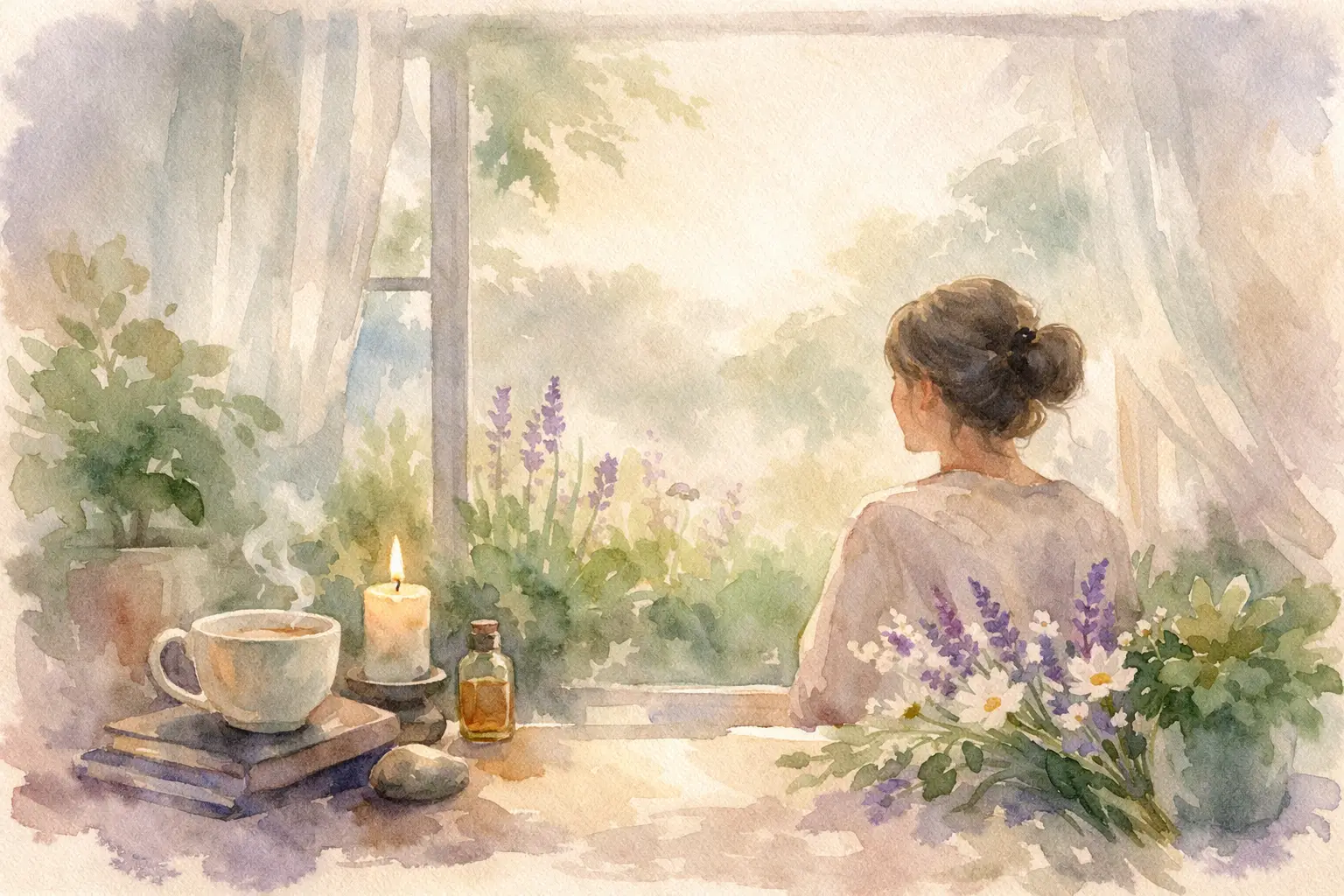
Some days, caregiving begins before your feet touch the floor. A text from a sibling. A pill organizer on the counter. Your mother's voice sounding a little more fragile than it did last week. Daily rituals for caregiver stress matter here, in the tender ordinary of a life that asks so much of your mind, body, and heart.
What helps is rarely dramatic. Relief often arrives in small, repeatable acts that remind your nervous system you are still here, inside your own life, even while you are holding someone else's needs with devotion. A ritual does not need to be perfect or long to be meaningful. It simply needs to return you to yourself.
Why daily rituals for caregiver stress can feel grounding
Caregiving has a way of dissolving the edges of the day. Morning starts in urgency. Afternoon disappears in logistics. Evening brings its own ache, especially when your loved one is asleep and your body finally notices how much it has been carrying. Rituals create shape inside that blur.
There is a quiet mercy in doing the same gentle thing each day. It gives your inner world something familiar to reach for. That might be a hand on your heart before you answer calls, a few minutes of sunlight at the window, or a cup of tea you drink without multitasking. These moments do not erase grief or fatigue. They help you stay in relationship with yourself while you move through them.
The right ritual also depends on the season you are in. If your days are packed with hands-on care, the ritual may need to be brief and almost invisible. If you are supporting a parent from a distance, what you may need most is something that softens anticipatory grief and the helplessness of not being there. Either way, consistency matters more than ambition.
Start with one anchor, not a full routine
When life feels emotionally crowded, a complicated routine can become another thing to fail at. One anchor is kinder. Choose a single action that can happen at roughly the same point each day. Let it be simple enough that you can still keep it on the harder mornings.
A morning anchor works well for many caregivers because it meets the day before it gathers speed. Before checking your phone, place both feet on the floor and take one full breath. Notice the room. Say a sentence that meets the truth of the moment, such as, "May I meet this day with steadiness." This is not about forcing calm. It is about beginning with presence instead of bracing.
If mornings are chaotic, choose a transition that already exists. You might pause in the car before going into your parent's home, or wash your hands after helping with dinner and let that small act mean, for a moment, "I am returning to myself." Rituals are often strongest when they attach to something your day is already asking of you.
A gentle morning ritual for caregiver stress
The first ritual is a soft arrival into the day. Open a curtain. Step outside for two minutes. Drink water before coffee if that feels supportive. Then ask yourself one caring question: What do I need to stay steady today?
Some days the answer will be practical. A packed snack, a sweater, a reminder to sit down during the afternoon. Other days it will be emotional. Less news. One honest text to a friend. Permission to cry in the shower without narrating what the tears mean. When you ask this question consistently, you begin to rebuild trust with yourself.
If you keep a journal, let this be the only prompt you use in the morning. Do not pressure yourself into pages of reflection. A single sentence is enough. Caregiving can leave people feeling like they are disappearing into task after task. Writing down one need, one feeling, or one intention helps make your inner life visible again.
Let nourishment be a ritual, not an afterthought
Many caregivers become skilled at anticipating everyone else's hunger and discomfort while drifting away from their own. Nourishment rituals can be surprisingly stabilizing because they bring you back into the body, where stress often accumulates quietly.
This does not require a beautiful breakfast or a fully organized kitchen. It might mean eating something with protein before the day gets away from you, sitting down for ten minutes instead of standing over the sink, or preparing one familiar meal that signals comfort. The ritual is not culinary performance. The ritual is remembering that your body is part of this caregiving story too.
There is also emotional nourishment, which matters just as much. Some people need music while they fold laundry or drive to appointments. Others need silence. Some need a prayer, a poem, or a line copied onto an index card and carried in a pocket. What feeds you may look quiet from the outside, but inwardly it can create real spaciousness.
Movement that releases, rather than demands
When stress lives in the body, movement can help, though the kind of movement matters. Caregivers often do enough lifting, carrying, walking, and standing already. Your ritual does not need to be a workout. It can be a release.
Stretch while the kettle boils. Roll your shoulders in the hallway. Take a ten-minute walk around the block after a difficult call. If your body wants rest more than exertion, lie on the floor with your calves on the couch and breathe there for a few minutes. The question is not, "What is the most effective routine?" The gentler question is, "What helps my body unclench today?"
That distinction matters because some forms of wellness can feel punishing when you are already depleted. A ritual should support your capacity, not test it. There will be days when your most honest form of movement is stepping outside and letting fresh air touch your face. That still counts.
Create a small boundary ritual before and after care tasks
One of the hardest parts of caregiving is how easily it spills into every emotional room of your life. Even when you are not actively helping, part of you remains on alert. Boundary rituals can soften that constant state of readiness.
Before a care task, try a brief centering practice. Place a hand on a doorknob, steering wheel, or countertop and take one breath before you proceed. Let that breath mark a threshold. You are entering a space of service, yes, but you are entering it with awareness.
Afterward, create a closing gesture. Wash your hands slowly. Change your shirt. Step outside and look at the sky for sixty seconds. This may sound small, yet symbolic actions can help your mind and body register that one chapter of the day has ended. Without these transitions, stress can remain undigested.
Evening rituals for caregiver stress and grief
Evening often brings the feelings that daytime kept at bay. Once the house is quiet, grief can move closer. So can resentment, tenderness, guilt, love, and sheer fatigue. An evening ritual does not need to sort these feelings out. It simply needs to make room for them.
You might dim the lights earlier, make a cup of tea, and sit with a journal for five minutes. You might ask, "What felt heavy today, and what helped me carry it?" Some nights you may write a few lines. Other nights you may only sit and breathe. The ritual is the permission.
If journaling feels too exposed at the end of the day, use objects instead of words. Light a candle. Fold a blanket around your shoulders. Place your phone in another room for twenty minutes. Let your nervous system receive a signal that it does not need to be available every second.
Daily rituals for caregiver stress work best when they are honest
The most nourishing rituals are rarely the prettiest ones. They are the ones that fit the truth of your life. If you are exhausted, choose shorter rituals. If touch soothes you, let the ritual involve warmth, fabric, water, or lotion. If words are where you process experience, build around writing, prayer, or voice notes. There is no gold star for making your ritual look graceful from the outside.
It also helps to release the belief that consistency means never missing a day. Caregiving is unpredictable. Some days will unravel. The point is not a perfect streak. The point is returning, again and again, to a practice that meets you with gentleness. At wearelovewins, we believe love is a practice, and that includes the quiet ways you learn to care for yourself within a life of caring for others.
There may be seasons when a ritual feels almost too small for the size of what you are carrying. Even then, small does not mean insignificant. A hand on your chest. A glass of water in morning light. A whispered prayer in the car. These are humble acts, yet they can hold surprising dignity.
If you are walking through a season of caregiving that feels lonely, invisible, or emotionally tangled, you are in the right place for slower forms of support. Begin with one ritual that feels doable today. Let it be uncomplicated. Let it be yours. Over time, that small daily return can become a space held with love, and sometimes that is where strength quietly grows.