Can Grief Coexist With Gratitude? Yes, Gently
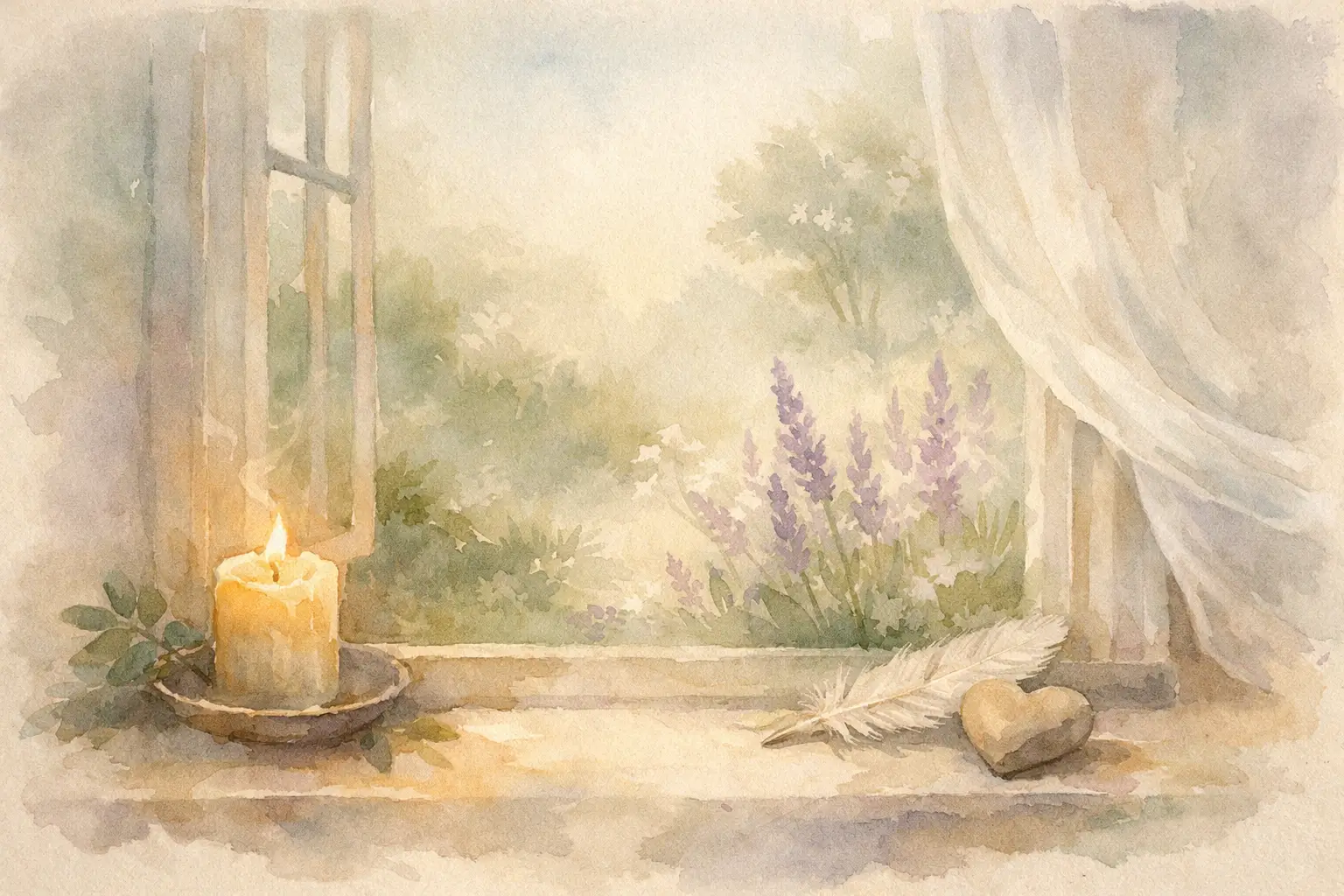
The question, can grief coexist with gratitude, often arrives in a quiet moment: while you are washing a parent’s favorite mug, noticing the afternoon light on their chair, or feeling relieved that today’s needs were manageable. You may feel thankful for a shared laugh and heartbroken by what has changed, all within the same breath. There is nothing confused or disloyal about that experience. This is one of the tender truths of loving someone through aging, illness, absence, or a changing family role.
Gratitude does not cancel grief. Grief does not make you incapable of appreciating what remains. Both can live in the same heart, sometimes peacefully and sometimes with enough friction to leave you tired before the day has even begun. A space held with love can make room for all of it.
Can Grief Coexist With Gratitude in Caregiving?
Yes. It often does, especially when caregiving asks you to hold the past, present, and future at once. You might be grateful your mother is still here to tell a story from your childhood, while grieving the ease with which she once moved through her own home. You might feel deep appreciation for a sibling who steps in, while carrying resentment that the responsibility is still so heavy. You may be thankful for a peaceful afternoon and devastated by what that peace seems to reveal.
These feelings do not need to be arranged into a more acceptable order. Love rarely moves in a straight line, and neither does grief. When a parent’s life is changing, you may begin grieving long before there is a clear ending. You are grieving routines, familiar roles, private jokes that land differently now, and the version of yourself who could simply call home without first thinking about what might be needed.
Gratitude can appear here as a small warmth, not a demand for optimism. It may be gratitude for a hand held at the right moment, for a meal that brought everyone to the same table, or for the knowledge that you showed up with patience when patience was hard to find. It can be modest. It can be incomplete. It does not need to make the sorrow meaningful in order to be real.
Why Gratitude Can Feel Complicated
Sometimes gratitude language has been used too quickly around grief. People may offer it with good intentions: focus on the good memories, be thankful for the time you had, look for a silver lining. Yet when sorrow is still close to the skin, these words can feel like a request to step away from what hurts before you have been witnessed inside it.
You do not have to be grateful for the loss, the exhaustion, the uncertainty, or the ways caregiving has narrowed your days. You are allowed to wish circumstances were different. You are allowed to miss who your loved one was, even as you honor who they are now. Gratitude becomes more sustaining when it is offered as an invitation rather than an assignment.
There is also a difference between gratitude and guilt. Feeling grateful for a quiet evening does not mean you love someone less. Feeling relief after a difficult season does not erase devotion. The nervous system and the heart both seek rest when they have been carrying a great deal. Letting yourself receive a moment of ease can be part of how you continue.
Let the feelings sit beside each other
Rather than asking yourself to choose one feeling, try giving each one a chair. You might say, “I am grieving how much has changed, and I am grateful we had coffee together this morning.” The word and matters. It makes the emotional room wider.
This kind of language can be especially helpful when guilt rises. Guilt often asks for certainty: Should I feel sadder? Should I be more appreciative? Did I do enough today? A gentler response is rarely a perfect answer. It may be a reminder that you are responding to a situation that asks a lot of a human heart.
A Gentle Practice for Holding Both
You do not need an elaborate ritual to acknowledge mixed feelings. A few quiet minutes at the beginning or end of the day can offer a place for what has nowhere else to go. Consider keeping a notebook near your bed, the kitchen counter, or the chair where you tend to pause.
Write one sentence that begins, “Today, I am grieving…” Then write another that begins, “Today, I am grateful for…” Allow the answers to be plain. Perhaps you are grieving the phone call you avoided, the sharpness in your own voice, or a new sign that life is changing. Perhaps you are grateful for clean sheets, a neighbor’s kindness, a favorite song playing in the car, or the fact that you made it through a difficult morning.
The purpose is not to balance the page. Some days grief will take up nearly all the space. On other days, gratitude may come more easily. Let the page tell the truth of that particular day rather than asking it to perform emotional progress.
If writing feels like one more thing to manage, place a hand over your heart and name one thing that hurts and one thing that helped. You can do this while standing at the sink, waiting in a parking lot, or settling into bed. Small rituals are often the ones that stay with us because they fit inside real life.
When Gratitude Is Not Available
There will be days when gratitude feels distant, and those days deserve tenderness too. You may be depleted, angry, numb, or simply unable to find a bright edge around the circumstances. Nothing has gone wrong because you cannot locate a lesson or a blessing.
On those days, replace gratitude with gentleness. Ask, “What would make this next hour feel a little more bearable?” The answer may be a glass of water, ten minutes outside, a text to someone safe, or permission to leave one task unfinished. It may be silence. Caregiving can make even basic choices feel loaded, so let the question stay small.
Grief also changes shape over time. A memory that once undid you may later bring tenderness. A task that felt unbearable may become familiar. Then, without warning, a scent, song, or old photograph may bring the ache close again. This movement does not mean you are moving backward. It means love has a long memory.
Share the truest version when you can
Many caregivers become skilled at offering the acceptable version of how they are doing. “Fine, just busy” can feel easier than explaining the strange loneliness of being needed constantly while feeling unseen. But if there is someone in your life who can hold a fuller truth, consider trying a more honest sentence.
You might say, “I’m grateful for the time we have, and I’m exhausted by how much has changed.” Or, “I had a beautiful moment with Dad today, and it made me miss him at the same time.” These are not contradictions to solve. They are invitations for someone to meet you in the reality you are living.
At wearelovewins, we believe love is an active practice, often made of quiet acts that no one applauds: refilling a water glass, listening to the same story again, making room for your own tears after everyone else is asleep. Naming the complexity does not diminish these acts. It honors the person doing them.
Let Love Be More Than One Feeling
Grief and gratitude can coexist because love itself contains more than one emotion. Love can be tender and tired. It can feel like devotion one day and frustration the next. It can hold memories that comfort you and memories that break you open. When you stop asking your heart to be simpler than the season you are in, you may find a little more room to breathe.
If today holds sorrow, let it be acknowledged. If it holds a small point of gratitude, let that be received without pressure to turn it into a larger story. You are allowed to carry both, one carefully held moment at a time.